What Is 7-OH? The Gas Station Opioid'and Why It’s Being Banned

7-OH, short for 7-hydroxymitragynine, is a compound found in the kratom plant. It binds to the same receptors in the brain as morphine and oxycodone. In the leaf, it makes up only a sliver of the plant's alkaloids. However, manufactured versions, like the gummies and shots you find at gas stations and smoke shops, have a concentration far higher than anything you can find in nature.
The Kratom leaf and these concentrated products are often sold side by side, sometimes even under the same brand. But they aren't the same product. Federal regulators have started treating these high-potency products as an opioid. It is chemically distinct from poppy-derived opioids such as morphine, but it activates the mu-opioid receptors.
Ten states have already banned it, and it's in the process of being federally restricted by the Drug Enforcement Administration (DEA).
In this article, we cover what 7-OH is, how it differs from kratom and mitragynine, its effects, the current and future legal status, and how to test for it.
Listen to article


Table of Contents
Is Mitragynine the Same as 7OH?
No. Mitragynine and 7-OH both come from kratom, but they're different compounds. The biggest difference between the two is strength.
-
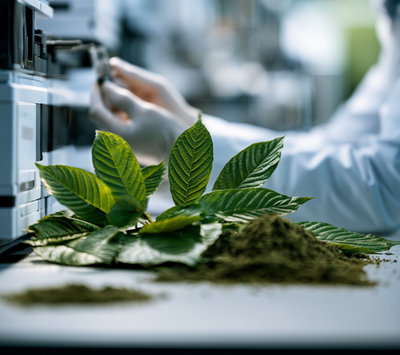
Kratom is a tree native to Southeast Asia. Its leaves are dried and sold as powder, capsules, or tea. For more information on the plant itself, see our guide to kratom.
-
Mitragynine is the most abundant active compound in kratom leaf. It acts on opioid receptors, but more weakly than 7-OH does.
-
7-OH is a minor compound in the leaf. The FDA says it makes up less than 2% of kratom's total alkaloids, but it is much more potent at the opioid receptor than mitragynine.
Does mitragynine convert to 7-OH?
Yes, in part. A 2019 study published in ACS Central Science found that the liver turns some mitragynine into 7-hydroxymitragynine, and that this metabolite is responsible for much of kratom's pain-relieving effect. That's one reason researchers see kratom leaf as having some opioid-like risk on its own.
Some manufacturers extract the mitragynine directly from the leaf and convert it into 7-OH. This creates a much larger and more concentrated dose that they use in their products, which is why these products can be so potent.
Is 7-OH stronger than kratom?
Yes, it is stronger than kratom by a wide margin. Natural kratom leaves contain only trace amounts of 7-OH. A DEA review of 250 products found doses ranging from 1 mg to 700 mg per serving. It's described as being highly potent with an abuse potential similar to heroin, morphine, and fentanyl.
Why It's Called a "Gas Station Opioid"
7-OH earned its nickname from the places where it's sold. These products are often found at gas stations, convenience stores, vape shops, and smoke shops. It's also commonly referred to as "gas station heroin" and "gas station oxy."
The packaging can be deceptive, often disguised as supplements, energy products, and even sweet treats. Common forms include:
-
Pressed tablets, which might even be scored down the middle like prescription pills
-
Gummies and chewy treats
-
Liquid shots and drink mixes
-
Powders, capsules, and strips that dissolve in your mouth
Even the wording on the labels can make them seem harmless. You might see the packaging describe these products as "botanical" or "alkaloid." However, the FDA has said 7-OH is not approved for dietary supplements, and in 2025 it even sent warning letters to seven companies selling these products.
To add to the concern, the easy access to these products in locations like gas stations is combined with the low cost. A DEA review found that the average cost per dose of 7-OH was only about $3.97.
7-OH Effects and Risks
7 OH effects look a lot like those of other opioids, and they get stronger as the dose goes up. Some of the common effects can include:
-
Euphoria
-
Pain relief
-
Feeling drowsy
-
Sedation
-
Feeling nauseous
-
Constipation
-
Itching
-
Small pupils
-
Slowed breathing
This is the type of drug that your body can build a tolerance to, which means that people need more and more of it to achieve the same effect. It also comes with some harsh withdrawals, similar to coming off an opioid.
Overdosing is a serious risk with this drug. Between January and July of 2025, poison centers reported 165 exposures to 7-OH, according to DEA data. Of course, combining 7-OH with other substances can increase the overdose risk even more.
What is 7-hydroxymitragynine used for?
It has no approved medical use in the United States. The FDA has not approved any drug containing 7-OH or kratom. Product strength varies greatly, labels may not be accurate, and the habit can create a new dependence.
Is 7-OH Legal?
The short answer: high-potency 7-OH is on its way to becoming a federally controlled substance. It's already banned in ten states. Here's where things stand as of November 2026.
Federal status of 7OH ban
-
July 2025: The FDA recommended that 7-OH is put under federal control. It sent warning letters to some companies selling 7-OH products.
-
July 2026: The DEA said that it planned to temporarily place 7-OH into the Schedule I classification.
-
October 2026: The DEA published a notice of intent to temporarily place 7-OH in Schedule I, which is the same category as heroin.
-
What it covers: Instead of focusing on the kratom leaf, the notice focuses on concentrated products. It covers products with more than 1mg of 7-OH per gram (or per milliliter for liquids). It also targets products where 7-OH makes up an unnaturally large portion of the product compared to mitragynine.
-
When it takes effect: The DEA said the order could publish on or after November 13, 2026. A temporary scheduling order lasts two years. After two years, it can be extended for one more year while permanent scheduling is considered. Check the Federal Register for the latest status.
State laws
Many states moved before the federal government did. Already, 10 states prohibit 7-OH: Alabama, Arkansas, Connecticut, Indiana, Kansas, Louisiana, Massachusetts, Tennessee, Vermont, and Wisconsin. Others, including Arizona, Colorado, South Carolina, and Texas, limit how much 7-OH a product can contain. Some cities and counties have passed their own rules too.
These laws are changing quickly. If your company operates in more than one state, check local rules before you write or update a drug-free workplace policy.
Does 7-OH Show Up on a Drug Test?
It doesn't show up on a standard drug test. The drug testing for opioids on your standard 5 panel or 10 panel, for example, looks for specific drugs like morphine, codeine, oxycodone, and hydrocodone. 7-OH is chemically different than these, so someone using 7-OH every day could pass a routine workplace drug test, depending on the panel chosen.
Kratom screening may identify exposure to 7-OH products that also contain mitragynine, but a mitragynine-only test does not directly detect 7-OH. Health Street's kratom urine drug test can identify mitragynine. You can add kratom testing to a standard panel, too. Health Street offers the kratom test on its own, bundled with a 12 panel, or bundled with a 14 panel.
Should employers test for 7-OH?
For many employers, yes. Someone could use 7-OH every day and still pass a standard drug screen. This can be a real risk for safety-sensitive jobs. The CDC shows that, from 2015 to 2025, reports involving kratom increased by 1,200%.
Frequently Asked Questions
Does 7-OH show up on a urine drug screening?
Not by default. Specialized kratom screening targets mitragynine and may identify exposure to 7-OH products because these products often also contain mitragynine. A full list of our kratom drug testing options can be found on our kratom substance page. It's important to note that these tests look for mitragynine, not 7-OH.
Is 7-OH stronger than kratom?
Yes. Kratom leaf contains only trace amounts of 7-OH. Concentrated products can contain hundreds of milligrams per dose, and 7-OH acts much more strongly on opioid receptors than mitragynine, kratom's main compound.
Is 7-OH still legal?
It depends on where you are. About 10 states have already banned it, and other states have placed limits on how strong the concentrated products can be. At the federal level, the DEA has stated that the order to restrict 7-OH could take effect on or after November 13, 2026.
Does mitragynine convert to 7-OH?
Yes, after kratom is used, the body converts some mitragynine into 7-OH. Concentrated products deliver 7-OH directly, so they can provide much higher exposures than the kratom leaf.
Is 7-OH the same as kratom?
No. Kratom is the whole plant, which contains dozens of active compounds. 7-OH is just one of them, and products sold as 7-OH concentrate it far beyond natural levels.
Is 7-OH an opioid?
It isn't made from the poppy opium, but it does act like an opioid and is often treated as such. It binds to the brain's mu-opioid receptors, just like morphine and oxycodone do.
Can you get addicted to 7-OH?
Yes, and regular use can increase a person's tolerance. There can also be opioid-like withdrawal symptoms when someone stops using it.
Can you overdose on 7-OH?
Yes, and overdoses can be dangerous, including symptoms like slowed or difficult breathing. Mixing it with other substances like alcohol, sedatives, or other opioids increases the risks even more.
How long does 7-OH stay in your system?
It varies with dose, frequency of use, and the type of test. Individual factors can also change the timeline.