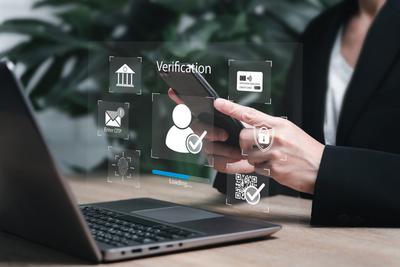
AI Candidate Fraud Is Increasing: How Employers Can Prevent ID Fraud in Hiring

The candidate you just interviewed could be fake. Not "slightly underqualified" fake, or "resume looks a little inflated" fake, but completely fabricated.
They may have used AI to write the resume, another person to handle the interview, and AI-generated fake IDs to move through basic screening. On the surface, everything looks polished and feels legitimate. You might even think that you've finally found the perfect candidate for the position. But behind the application, there may be a false identity.
This problem is affecting hiring teams all over the nation. AI-driven deception is becoming one of the biggest hiring challenges employers face. According to one survey, 41% of surveyed enterprises said they had already hired and onboarded a fraudulent candidate.
As technology continues to progress so quickly, hiring is no longer just about finding who is qualified. It is also about verifying whether the person in front of you is the actual applicant.
So how do you know the person you're about to hire is real?
Listen to article


Table of Contents
The Perfect Candidate May Be Your Biggest Warning Sign
Hiring teams are trained to look for the strongest candidate in the pool. Clear communication, a polished background, thoughtful answers, and a resume that matches the job can all feel very reassuring.
AI has made those signals less reliable.
A fraudulent applicant can now use tools to produce a perfect application, deliver smooth interview responses, and hide identity problems that would have been easier to spot in the past. As explained in Paperclipped's article, today's candidate fraud can include deepfake interviews, proxy candidates, identity manipulation, and synthetic profiles.
Deepfake job candidates are showing up more often, with nearly 1 in 5 U.S. hiring managers in a 1,000-person survey saying they've come across one.
Your Hiring Process May Not Be Built to Prevent ID Fraud
Most hiring systems were built on the assumption that candidates act in good faith. That assumption no longer holds as it once did.
Remote hiring has removed many natural checkpoints. Recruiters and hiring managers often never meet candidates in person. Documents get uploaded digitally. Interviews happen over video. Decisions move quickly because open roles need to be filled fast. This type of environment creates opportunity.
When the process depends too heavily on resumes, virtual interviews, and standard onboarding, application fraud detection becomes much harder. The person who applies may not be the person who interviews. The person who interviews may not be the one who shows up on day one. And the identity documents submitted may not be trustworthy on their own.
Application Fraud Can Quickly Become a Business and Security Risk
A fraudulent hire can become a business risk almost immediately. Once someone gets through the onboarding process, they may receive company equipment, system credentials, customer data access, or entry into sensitive internal platforms. By that point, the damage doesn't take long.
The U.S. Department of Justice has already warned about coordinated remote worker schemes involving stolen identities and fraudulent employment at U.S. companies. These were organized operations tied to real financial and security consequences.
Fraud risk doesn't stop at hiring. It often shows up during onboarding. If your hiring, screening, and onboarding steps aren't connected, it becomes much easier for something to slip through the cracks. This guide on how to choose remote onboarding software explains how to keep everything in one place so identity checks, documents, and screening results stay visible and trackable.
Hiring Falls Apart When Identity Isn’t Verified
The entire hiring process depends on one thing being true first: the candidate is who they say they are. If that is not confirmed, everything else becomes shaky.
-
A strong interview does not prove identity. A candidate can perform well in an interview while still misrepresenting who they are or using outside assistance.
-
A polished resume does not prove identity. Even strong resumes can be misleading, which is why using tools like resume verification helps confirm that a candidate's experience is accurate and tied to the correct individual.
-
A background check tied to the wrong person does not protect you. It may return accurate results, but those results can still be linked to a false or stolen identity.
That is why the rise of AI fake ID tools and AI-generated fake IDs is so concerning. These tactics exaggerate experience and attack the foundation of the hiring process itself.
If employers want to prevent ID fraud, identity has to be addressed earlier and more deliberately.
Why AI Candidate Fraud Detection Is More Important than Ever
The increase in hiring fraud means employers need a stronger way to spot risk before access is granted. Modern fraud moves faster than older hiring workflows were designed to handle.
To reduce risk, employers should:
-
verify identity earlier in the process
-
watch for inconsistencies between application materials and live interviews
-
avoid granting access before key checks are complete
-
connect hiring and onboarding controls more closely
-
treat application fraud prevention as part of a broader risk strategy
In the age of AI, employers must update their screening practices instead of relying on outdated assumptions. Otherwise, they risk hiring under a false identity and discovering the fraud only after access has been granted.
How Easy It Is to Fake Identity Without Proper Verification
When identity isn't verified properly, it becomes surprisingly easy for someone to move through the hiring process using a false or manipulated identity. A candidate can submit documents, pass interviews, and reach onboarding without ever proving they are the same person behind the application.
This is exactly where many hiring processes break down. Without a reliable way to connect an ID to a real, live person, employers are left relying on trust, which is no longer enough.
Here's a simple example of how identity verification works.
The Solution Is Better ID Verification
Trust and even the most thorough interview process are no longer enough, but don't panic just yet. The answer is to build verification into every step of the hiring process.
Identity verification matters more now than ever before. When employers can confirm that the ID is real, the person is real, and the person matches the ID, they have a much stronger defense against impersonation, proxy candidates, and identity-based hiring fraud.
If your current process doesn't include identity verification, this guide on remote ID verification shows how to start.
That article explains how the process works, what gets checked, and how employers can use it to reduce fraud in remote hiring and onboarding.
Your Hiring Process Has To Adapt
The fear around this issue is justified.
Hiring teams are no longer just reviewing qualifications. They are trying to separate real candidates from manufactured ones. As candidate fraud, application fraud, and identity deception become easier to execute, the cost of weak verification keeps rising.
The real question is whether your hiring process is built to stop it.
Frequently Asked Questions
What is candidate fraud?
Candidate fraud happens when a job applicant misrepresents their identity, qualifications, or experience during the hiring process. This can include exaggerating work history, using someone else to complete an interview, or submitting completely fabricated credentials.
In some cases, candidates may use AI tools to generate resumes, receive real-time assistance during interviews, or rely on proxy candidates—where one person applies and another interviews or performs the job. These bad actors are often skilled at hiding inconsistencies, which makes early detection more difficult.
Because of this, hiring teams need to watch for red flags such as mismatched communication styles, vague answers, or inconsistencies across stages of the hiring process.
What is application fraud?
Application fraud refers to any false or misleading information submitted during the hiring process. This includes identity deception, fabricated experience, impersonation, or the use of a fake identity to secure employment.
This type of fraud can happen at any stage, from resume submission to onboarding documents. In some cases, applicants may provide identification such as a driver's license that appears valid but does not belong to them or has been digitally altered.
How can companies prevent ID fraud?
To help prevent ID fraud, companies need to verify identity earlier in the hiring process. Delaying verification increases the risk that a fraudulent candidate can move through multiple steps and potentially gain access to systems or sensitive data.
Risk scoring helps identify patterns that may indicate fraud, allowing employers to prioritize review of high risk applicants and take action before damage occurs.
For a better look at how this works, see:
Why is AI making hiring fraud worse?
AI is making hiring fraud more difficult to detect because it allows candidates to appear more polished and convincing than ever before. It removes many of the traditional red flags hiring teams relied on in the past. Fraud no longer looks obvious—it looks qualified.
As a result, employers need stronger ID fraud detection processes to keep up with the speed and sophistication of modern fraud.
How common is ID fraud?
ID fraud is more common than many employers expect, and it continues to increase as remote hiring expands. Digital processes make it easier for fraudsters to submit applications using stolen or synthetic identities without being physically verified.
Many organizations have already encountered fraudulent candidates, and identity-based fraud is a growing contributor to financial losses and operational risk. As AI tools become more accessible, creating a convincing fake identity requires less effort than ever before.
ID fraud is an even higher risk concern for any company that hires remotely or relies on digital onboarding workflows.
What are AI-generated fake IDs?
AI-generated fake IDs are digitally created or altered identity documents designed to appear legitimate. These may include manipulated government-issued IDs, such as a driver's license, or entirely synthetic identities built from real and fabricated data.
These documents can sometimes pass basic checks, especially if verification relies only on visual inspection. When paired with impersonation tactics or deepfake technology, they become even harder to detect.
How can employers detect application fraud during interviews?
Detecting application fraud during interviews requires paying close attention to behavior and consistency.
Hiring teams should watch for:
-
delayed or overly structured responses
-
candidates reading answers off-screen
-
inconsistent work history explanations
-
sudden changes in tone, voice, or confidence
These are common red flags that may indicate the candidate is using external assistance or misrepresenting themselves.
However, interviews alone are not enough. Fraudulent candidates can still perform well in interviews, which is why identity verification is so important.
When should identity verification happen in the hiring process?
Identity verification should happen as early as possible, ideally before final hiring decisions are made.
What industries are most at risk for hiring fraud?
Any organization can be affected, but industries with remote hiring and access to sensitive data are especially vulnerable.
This includes:
-
technology and IT roles
-
healthcare and financial services
-
customer support and remote operations
-
government contractors
These industries often deal with sensitive systems or data, making them a prime target for bad actors looking to exploit weak hiring processes.
What is the difference between candidate fraud and identity fraud?
Candidate fraud includes any type of misrepresentation by an applicant, such as exaggerating experience or using AI tools to improve responses.
Identity fraud is more severe. It involves using a fake identity, stolen information, or synthetic data to impersonate another person entirely.
In many modern cases, these two overlap, increasing the overall risk and making detection more difficult without structured verification. Health Street offers several services to help protect against these, including resume verification and ID verification.
Why isn’t a background check enough to stop fraud?
A background check verifies information tied to an identity, but it does not confirm that the identity itself is valid. If a fraudulent applicant uses a stolen or synthetic identity, the background check may return accurate results for the wrong person. This creates a false sense of security.
To truly prevent fraud, identity must be verified first. Only then can background checks provide reliable protection against risk and financial losses.