Respirator Fit Testing Isn’t as Easy as It Seems

Just because a respirator fits snugly doesn't mean it's correct. In August 2026, a brick manufacturer in Pennsylvania faced nearly $500,000 in penalties. An inspection found many workplace violations, and one of them was related to the annual fit tests for their employees. The employees weren't getting their tests. OSHA announced the proposed penalties.
This example is a great reminder that respirator fit testing is one of those requirements that sounds simple until you start digging into it. In addition to annual testing, employees may need another test sooner if the respirator changes, facial features change, or other factors affect how the respirator could fit their face. A tight-fitting respirator doesn't always mean you're in the clear.
Listen to article
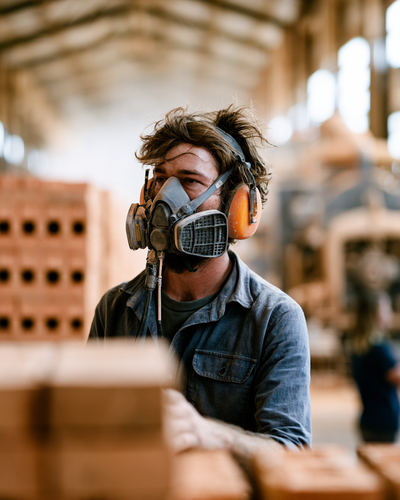

Table of Contents
First, What Is a Fit Test for a Respirator?
A fit test for a respirator checks whether a respirator seals properly to an employee's face. The test is very specific to the person and the device. You're not just confirming that John can wear an N95. You're confirming that John can wear this particular make, model, style, and size of N95.
Why?
Because faces are different, and respirators are different. A medium from one manufacturer may fit someone perfectly, while a medium from another leaves a small gap around the nose or chin. NIOSH points out that respirator sizing isn't standardized across models, so you can't assume one medium fits like another.
The little gaps matter quite a bit. Air can sneak around the edges instead of going through the filter. The whole point of a respirator mask fit test is to make sure the respirator employees are counting on can actually form the seal it needs.
Employers can schedule a respirator fit test with Health Street at occupational health clinics nationwide.
So, How Often Do You Actually Need to Fit Test Employees?
Here's the easy number to remember:
Once a year.
OSHA requires fit testing at least annually for employees who are required to use tight-fitting facepiece respirators.
But this is where employers can get tripped up. Annual testing isn't the only time another fit test may be required.
You also need to think about another test when:
-
An employee starts using a respirator for the first time
-
You switch to a different make or model
-
The employee changes respirator size or style
-
Something physically changes that could affect the seal
That third one is probably obvious. The second one is easier to miss.
Say your company has been buying the same respirator for years. Then your supplier changes products, your usual model is backordered, or purchasing finds a different option.
It looks basically the same. Same type of respirator. Same size.
Good to go?
Not necessarily.
OSHA requires employees to be fit tested with the same make, model, style, and size they'll actually use. So changing the respirator can mean repeating the fit test.
That's a small detail that can turn a routine purchasing decision into a compliance problem.
And Then There's the Employee's Face
This part makes sense once you think about it. The respirator hasn't changed, but the person wearing it might have.
OSHA says another respirator fit test may be needed after physical changes that could affect how the mask forms a seal on the person's face. That can include significant weight changes, facial scarring, dental changes, facial surgery, or even facial hair.
For a tight-fitting respirator to work properly, facial hair can't get between the respirator's sealing surface and the skin. So if an employee grows a beard where the respirator needs to seal, that can be a problem.
What Does a Respirator Fit Test Actually Look Like?
There are two main ways to do fit testing for respirators: qualitative and quantitative.
Those names make the process sound more complicated than it is.
Qualitative Fit Testing
Qualitative testing is basically pass or fail.
The employee puts on the respirator and goes through a test using an OSHA-accepted test agent. Depending on the method, the employee may be asked whether they can taste the substance while wearing the respirator.
If they can detect it when they shouldn't be able to, something isn't sealing correctly.
There are limits on when qualitative testing can be used, so it isn't appropriate for every respirator or workplace situation.
Quantitative Fit Testing
Quantitative testing uses equipment to actually measure leakage around the respirator.
Instead of getting a simple pass or fail based on the employee detecting a test substance, you get a number called a fit factor.
During the test, the employee does things like turn their head, look up and down, talk, and bend over.
Which makes sense. Employees generally aren't standing perfectly still with their heads facing forward all day.
You want to know what happens to that seal when the person actually moves.
Wait, Isn't That What a Seal Check Is For?
This is another easy mix-up. A fit test is the formal test that confirms a particular respirator fits an employee. A user seal check is what the employee does every time they put the respirator on to make sure it's seated correctly.
Passing a fit test doesn't mean the respirator will automatically be positioned correctly every single time an employee puts it on. And doing a seal check doesn't replace the required fit test. You need both.
The Annual Fit Test Isn't Really the Whole Story
This is probably the biggest takeaway for employers. If your system is basically, "Everybody gets tested every January," you may still have gaps. A lot can happen between January and December, like major dental work or weight fluctuations. You don't necessarily wait for January to roll around again.
OSHA specifically addresses physical changes that can affect respirator fit. The standard also addresses situations where an employee who previously passed a test later says the respirator doesn't fit properly.
Fit Testing Isn't Your Whole Respiratory Protection Program, Either
Here's another place where things can get muddled.
Getting everyone through a respirator mask fit test doesn't automatically mean your respiratory protection program is covered.
Depending on the workplace and why respirators are required, OSHA's Respiratory Protection Standard can involve quite a few pieces, including:
-
Choosing the right respirators
-
Medical evaluations
-
Fit testing
-
Training employees
-
Proper respirator use
-
Cleaning and storing equipment
-
Inspecting and maintaining respirators
-
Evaluating the respiratory protection program
The medical evaluation is especially worth mentioning because people sometimes confuse it with the fit test.
They're two different things.
The medical evaluation looks at whether an employee is medically able to wear the respirator. The fit test looks at whether that respirator actually fits the employee.
Why Are We Talking About This Now?
Because OSHA just gave employers a pretty good example of what can happen when respiratory protection requirements fall through the cracks.
In August 2026, OSHA announced citations against Watsontown Brick Company after an inspection of its Pennsylvania facility.
The biggest concern was workers' exposure to respirable crystalline silica. But investigators found other problems with the company's respiratory protection practices, too.
One was failure to conduct annual respirator fit testing.
And this wasn't the first time OSHA had found a fit-testing problem within the company. A previous violation at another location contributed to OSHA classifying the new violation as a repeat violation.
Altogether, OSHA proposed $496,528 in penalties for the violations found during the inspection.
Now, obviously, missing a fit test alone doesn't automatically mean you're getting a half-million-dollar fine. There were several serious issues involved in this case.
But it's still a useful example.
Something as routine as keeping up with respirator fit testing can become part of a much bigger workplace safety problem when it gets overlooked.
One Last Thing: Keep the Records
You did the fit tests. Great.
Now make sure you can prove it.
OSHA requires employers to maintain records of the qualitative and quantitative fit tests given to employees.
Those records include information such as who was tested, when the test happened, what kind of test was performed, and the make, model, style, and size of respirator used.
That's particularly important when you have employees spread across different facilities.
Because six months from now, "I'm pretty sure we tested everybody" isn't nearly as useful as being able to pull up the record.
The Bottom Line
Respirator fit testing isn't particularly complicated.
What makes it tricky is all the little stuff around it.
The employee needs the right respirator. They need to be tested in the respirator they're actually going to wear. The test needs to be repeated annually. Changes to the respirator or the employee can mean another test is needed sooner. And employers need records showing that it happened.
So if you're responsible for respiratory protection at your company, don't stop at asking whether your employees have respirators.
Ask whether those respirators actually fit.
Frequently Asked Questions
How often is a respirator fit test required?
At least once a year for employees required to use tight-fitting facepiece respirators. OSHA also requires fit testing before initial use and when an employee changes to a different respirator facepiece. Another test may be needed if physical changes could affect the respirator's fit.
What is a fit test for a respirator?
A fit test for a respirator checks whether a specific tight-fitting respirator creates an acceptable seal on an employee's face. The employee is tested using the same make, model, style, and size of respirator they will use at work.
Does an N95 need a respirator fit test?
If an employer requires an employee to wear a tight-fitting N95 for respiratory protection, OSHA's respiratory protection requirements generally include fit testing. Certain voluntary-use situations are treated differently.
What happens if someone fails a respirator mask fit test?
Try another respirator. A different size, style, model, or manufacturer may provide a better fit. OSHA requires employers to provide enough options for employees to find a respirator that fits correctly.
Can employees have facial hair during fit testing?
Facial hair can't interfere with the sealing surface of a tight-fitting respirator. A beard that sits underneath the seal is a problem. Facial hair completely outside the sealing area may be acceptable as long as it doesn't interfere with the respirator's operation or seal.
Is a respirator fit test the same as a medical evaluation?
No. The medical evaluation determines whether an employee is medically able to use a respirator. The fit test determines whether a specific respirator properly fits that employee.
Where can employers schedule fit testing for respirators?
Health Street offers respirator fit testing through a nationwide network of occupational health clinics, making it easier to coordinate testing for employees in one location or across multiple states.